
Urea 46
46% nitrogen urea at world-class spec — prilled and granular grades, multi-origin supply via Caspian, Black Sea, and Persian Gulf corridors.
We supply bulk urea 46 — the highest-nitrogen solid mineral fertiliser traded at scale, with a 46.0% N minimum guarantee. Both prilled (soluble blends, fertigation) and granular (mechanical spreading, slow-release friendly) grades are available through established producer relationships in CIS, Iran, Egypt, and the GCC. Programme volumes start at one 40-ft container (~25 MT) for first-time buyers and scale to 25,000+ MT vessel loads for established programmes.
- 46% nitrogen min
- Prilled & granular
- Multi-origin supply
- SGS / BV / Intertek
Overview
46% nitrogen — the global benchmark for solid N fertilisers
Urea 46 is the most concentrated solid nitrogen fertiliser in commercial trade: 46.0% nitrogen by weight, manufactured at industrial scale through the ammonia-CO₂ synthesis route. It accounts for the majority of global N fertiliser tonnage moved by sea, and remains the procurement default for grain mills, fertigation programmes, and large-scale agronomy operations.
Two physical forms are commercially supplied:
- Prilled. 1.0–2.5 mm spherical particles produced by spraying molten urea down a prilling tower. Dense, smooth, fast-dissolving — ideal for soluble blends, fertigation, and foliar applications. Lower mechanical hardness, so handle gently to avoid dust generation.
- Granular. 2.0–4.75 mm rounded particles produced through a fluidised-bed or pan granulation process. Harder, anti-caking-treated, and tolerant of mechanical spreading — preferred for direct soil application, broadcast use, and slow-release coating.
Both forms ship with full Certificate of Analysis covering nitrogen content, biuret, moisture, particle size distribution, and free ammonia. International standards observed: GOST 2081-2010 (CIS origin), ISIRI 8094 (Iranian origin), and EN 13317 / national equivalents elsewhere.
Specification
Full technical specification
Standard offer specifications. Variances are confirmed per shipment via SGS / Bureau Veritas / Intertek pre-loading inspection.
| Parameter | Prilled | Granular |
|---|---|---|
| Total nitrogen (N) | 46.0% min | 46.0% min |
| Biuret content | ≤1.5% | ≤1.0% |
| Moisture content | ≤0.5% | ≤0.5% |
| Free ammonia | ≤0.012% | ≤0.012% |
| Particle size range | 1.0–2.5 mm | 2.0–4.75 mm |
| Bulk density | 0.65–0.70 g/cm³ | 0.74–0.78 g/cm³ |
| Anti-caking treatment | Standard (formaldehyde) | Standard (formaldehyde) |
| Colour | White / off-white | White / off-white |
| Standard | GOST 2081-2010 / ISIRI 8094 / EN 13317 | GOST 2081-2010 / ISIRI 8094 / EN 13317 |
Sourcing
Multi-origin networks across CIS, MENA, GCC, and the Caspian
Urea 46 supply is structurally redundant — we work across multiple producer networks so a single corridor disruption (drought-driven gas curtailment, port congestion, or producer maintenance) doesn't break a buyer's programme.
- CIS (Russia). Loading via Yuzhny, Novorossiysk, and Tuapse for Black Sea routing. Major producers include Acron, EuroChem, and SayanskKhimplast. Cost-competitive at scale, with reliable shipping windows outside the November–March ice season.
- Iran. Bandar Imam and Bandar Abbas, fed by Pardis Petrochemical, Razi, and Khorasan. Persistently the lowest-cost origin per MT — sanctions/banking-review path applies, which we handle on the documentary side.
- Egypt. Damietta and Adabiya, fed by MOPCO and Abu Qir. Strong fit for African and Mediterranean destinations; Suez Canal routing to GCC keeps lead times tight.
- GCC. Sohar (OMIFCO), Ruwais (ADNOC), Mesaieed (QAFCO), and Yanbu (SABIC). Premium pricing but fastest lead times and short-haul shipping for GCC buyers — typical 1-week loading window.
- Indonesia. Cilacap and Bontang via Pupuk Indonesia. Strategic for South Asian and Far Eastern destinations.
Origin is nominated per shipment based on the lowest landed-cost combination of FOB price, freight rate, and corridor risk for your destination port.
Quality
Pre-shipment inspection on every parcel
Every urea 46 shipment is inspected by SGS, Bureau Veritas, or Intertek at the loading port before vessel departure. Shipment documents include:
- Certificate of Analysis — total nitrogen, biuret, moisture, particle size distribution, ash residue, free ammonia
- Certificate of Origin — issued by chamber of commerce or customs at the loading country
- Standard compliance certificate — GOST / ISIRI / EN equivalent depending on origin
- Bill of lading — with explicit loading-port nomination
- Phytosanitary certificate — where required by the destination country (most GCC + India + Pakistan destinations require it)
Cargo insurance is arranged for CIF terms; available for FOB / CFR on request, with the certificate countersigned to the buyer's bank for LC documentation.
Frequently asked
Buyer Questions
What is the difference between prilled and granular urea 46?
Prilled urea (1.0–2.5 mm spherical particles) is dense and fast-dissolving — ideal for soluble blends, fertigation, and foliar applications. Granular urea (2.0–4.75 mm) is harder, anti-caking-treated, and easier to spread mechanically — better for direct soil application. Both grades carry the 46% nitrogen guarantee.
What is the minimum order quantity?
1 × 40-ft container (~25 MT) for first-time buyers and trial programmes. Established programmes typically start at 5,000 MT, with bulk-vessel loads scaling to 25,000+ MT for major mills and distributors. Custom origin nomination is available per shipment.
Which origins do you supply urea 46 from?
CIS (Russia — via Yuzhny, Novorossiysk, Tuapse), Iran (Bandar Imam, Bandar Abbas), Egypt (Damietta, Adabiya), GCC (Sohar, Ruwais, Mesaieed, Yanbu), and Indonesia (Cilacap). Origin is nominated per shipment based on best price, lead time, and corridor accessibility for your destination port.
Why does biuret content matter?
Biuret is a urea by-product that becomes phytotoxic at elevated concentrations. Granular urea ships with ≤1.0% biuret (suitable for foliar application), prilled with ≤1.5% (acceptable for soil application). Both grades carry biuret testing on the Certificate of Analysis — request the spec sheet before committing to a foliar programme.
What is the typical lead time?
3–5 weeks from confirmed order to vessel loading in normal market conditions. CIS and GCC origins are fastest (2–4 weeks); Iranian origin adds 1–2 weeks for the documentary path. Tight harvest-season demand (typically March–April and August–October) can compress availability — book ahead.
Which Incoterms and ports are available?
FOB at all production-side ports (Yuzhny, Sohar, Damietta, Bandar Imam, Cilacap), CFR to your destination port, and CIF GCC for major destinations (Jebel Ali, Hamad, Dammam, Sohar). Cargo insurance is arranged for CIF terms; available for FOB/CFR on request.
Explore
Related Products
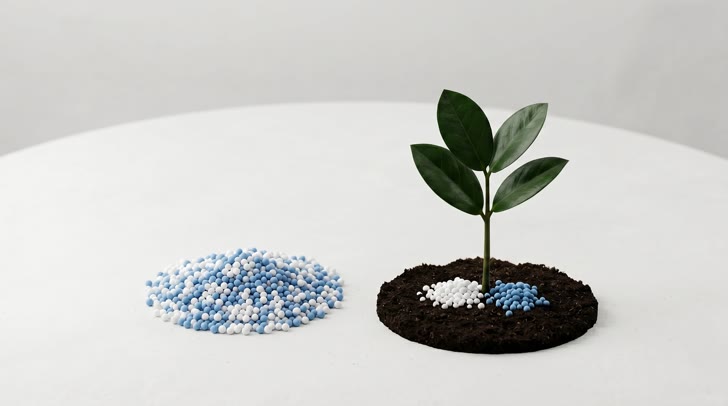
Chemical Fertilisers
Nitrogen, phosphorus, potassium, and NPK blends from vetted producers — in the specs your agronomy demands.

Baltic Peat
High-moss sphagnum peat from Baltic raised bogs — the reference substrate for professional horticulture.

Organic Peat Suspension
A natural soil activator based on peat-derived humic and fulvic substances — liquid, concentrated, fertigation-ready.
Wheat
Grade 3 milling wheat at world-class spec — bulk supply via the Aktau/Caspian corridor, with alternative origins on request.
High-Moor Peat
Working-grade sphagnum peat from CIS raised bogs — GOST-certified, rich in humic acids, built for substrate and compost programmes.